
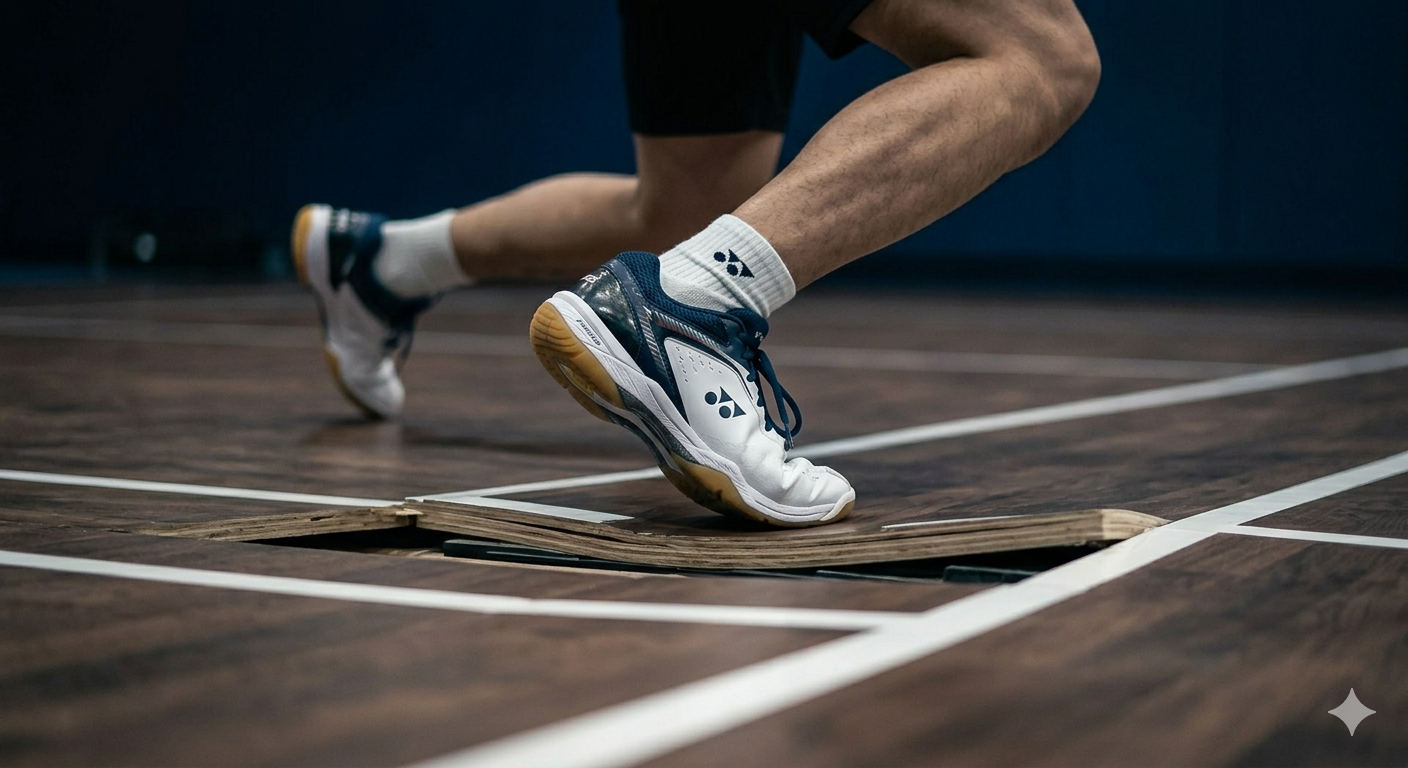
If you're training 2–3 times a week, the surface under your feet matters more than most players realise. We've all played in sports halls with concrete underneath a thin layer of vinyl — and felt it the next morning in our knees.
It's one of the main reasons Concorde bases itself at The Dome Badminton Centre in Southall. Their courts are built on professional sprung wood floors, and once you've played on them, going back is hard.
What the Floor Actually Does
A serious badminton lunge — especially when you're lunging to a net cord and pushing back hard — puts a big load through your knees and ankles. On a dead surface, all of that force travels straight up through your joints. A sprung floor gives slightly on impact, absorbing a portion of that shock before it reaches you.
Over a season of twice-weekly club nights, that difference adds up. Players who switch to sprung floors almost always notice less knee fatigue and fewer of those nagging niggles that don't quite go away.
It Also Affects How You Play
Beyond the physical side, there's a performance benefit too. Because your muscles aren't working as hard to absorb the landing, you can stay sharp for longer in a match. In a tight third set, that matters. The floor also gives a consistent feel underfoot — no dead spots, no uneven give — which makes net play more reliable.
We chose The Dome because the facility matches the level we play at. Four courts, low-glare lighting, badminton-only lines, and proper floors. If you're serious about your game and you've been playing on concrete, come and feel the difference.