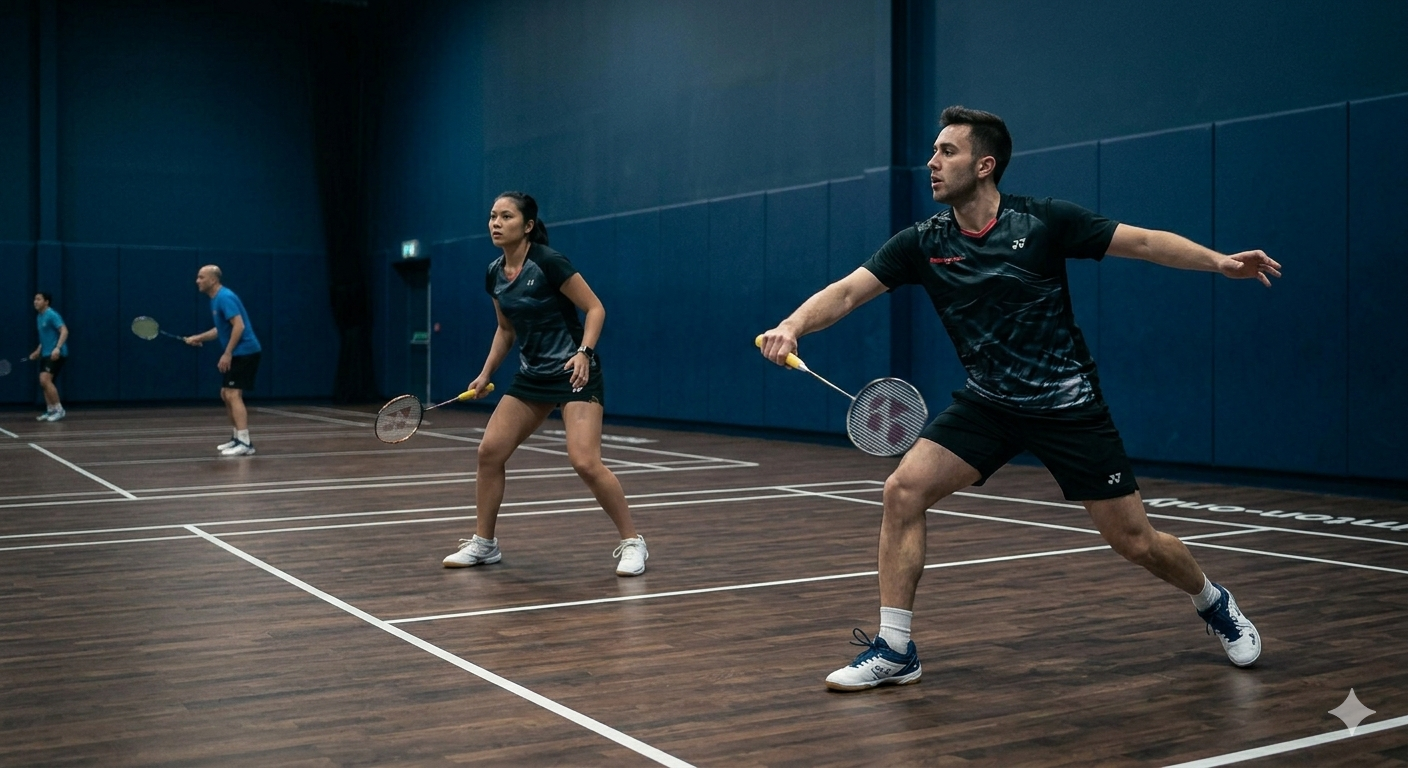
At intermediate level, a smash looks like a smash. In our top division at Concorde, you can't trust what you see. Players are actively trying to mislead you — and the good ones are very convincing.
Learning to read deception is one of the hardest things to develop in advanced doubles, but once it clicks, it changes how you defend completely.
The Preparation Looks the Same
That's the whole point. A well-executed deceptive shot uses the same backswing and shoulder rotation as a full smash. You're watching the wrong thing if you're watching the arm.
Racquet head speed is the first tell. On a genuine smash, the racquet accelerates all the way through. On a stop-drop or slow slice, there's a subtle deceleration in the last fraction of a second before contact — a hesitation that you can train yourself to spot.
Wrist position at contact is the second. A cross-court slice requires the wrist to turn inward at the moment of impact. It's a small movement but it's usually the only genuine giveaway, which is why advanced players work so hard to keep a relaxed grip right up until they commit.
Body rotation can also mislead. Some shots require the hips to turn away from where the shuttle is actually going. If your opponent's whole body is rotating hard to the left, don't automatically shift right — watch the racquet first.
Building Your Own Deception
Reading deception and executing it are two sides of the same coin. The more you practise disguising your own shots, the better you get at spotting others doing it. The low-glare lighting at The Dome helps — you can track the shuttle and the wrist movement clearly, which makes a real difference when you're trying to develop these skills.